
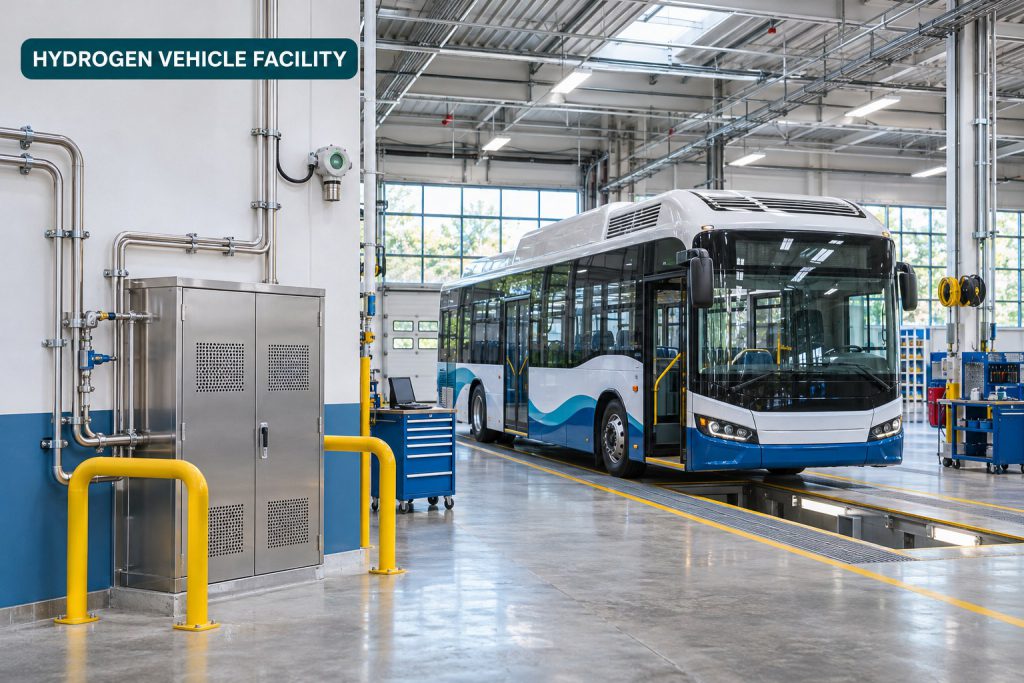
Hydrogen energy vehicle facilities may include vehicle fueling interfaces, fleet inspection or service areas, and the gas supply equipment that supports these operations. Plan hydrogen leak detection around the facility layout, equipment, ventilation and alarm requirements. The monitoring scope should match the actual site and the responsibilities of its owner, operator and integration team.
Hydrogen leak monitoring for vehicle facility operations
This page focuses on hydrogen vehicle depots, inspection and service facilities, and related mobility sites where hydrogen is handled. A fixed gas detection system can monitor project-selected locations and send alarm signals to personnel or connected systems, subject to confirmed equipment and interface capabilities. Where the project is a dedicated public hydrogen refueling station, see our hydrogen refueling station leak detection solution for that more specific operating scope.
Gas detection is one part of a broader facility safety design. It does not replace ventilation, maintenance procedures, operational controls, emergency planning or a site risk assessment. Any alarm response, ventilation action or equipment shutoff must be defined and reviewed for the specific project.
Vehicle facility areas to consider in a site review
Depending on facility operations and project scope, an assessment may consider:
- Hydrogen storage, supply equipment and connection points serving vehicle operations.
- Compressors, regulators, valves, piping and transfer connections.
- Vehicle fueling or filling interfaces, where refueling is part of the facility scope.
- Vehicle inspection, diagnostics or maintenance areas where hydrogen systems are handled.
- Enclosed equipment rooms and areas with restricted or changing ventilation conditions.
- On-site hydrogen generation or process equipment, where present and included in the project.
These are starting points for a site review, not universal detector locations. Final positions and quantities depend on likely release points, equipment arrangement, airflow, ventilation, operating conditions, maintenance access and applicable local requirements.
How the detection and alarm system works
A typical concept connects a hydrogen detector to a compatible gas detection controller. The controller receives and indicates alarm status, and may provide outputs to a local audible or visual alarm or an approved monitoring interface when the selected equipment supports the required configuration. Confirm any PLC, SCADA, ventilation, shutdown or valve interface, including its conditions and responsibility boundaries, before specifying it.
ILLUSTRATIVE SYSTEM FLOW
System components and configuration checks
A project configuration may include hydrogen detectors, a detection controller, local audible or visual alarms and monitoring interfaces. Compare the intended use with verified model information, including measurement range, outputs, operating environment, channels, approvals and communication options. Confirm each specification against current product documents.
- NA1000AW Online Hydrogen Detector — review the listed product information for candidate fixed monitoring applications.
- RD3000E Gas Leakage Detection Alarm Controller — check channel capacity, detector signal compatibility and alarm outputs against the project needs.
These are catalog examples only. Final equipment selection, compatibility, certifications and integration scope must be confirmed for the facility and selected models.
Detector placement starts with the site layout
Placement should account for potential release points, equipment locations, airflow, ventilation, enclosed areas, vehicle operations and maintenance access. A generic diagram cannot determine final positions or quantities. The responsible project team should review local requirements and the facility’s wider safety design.
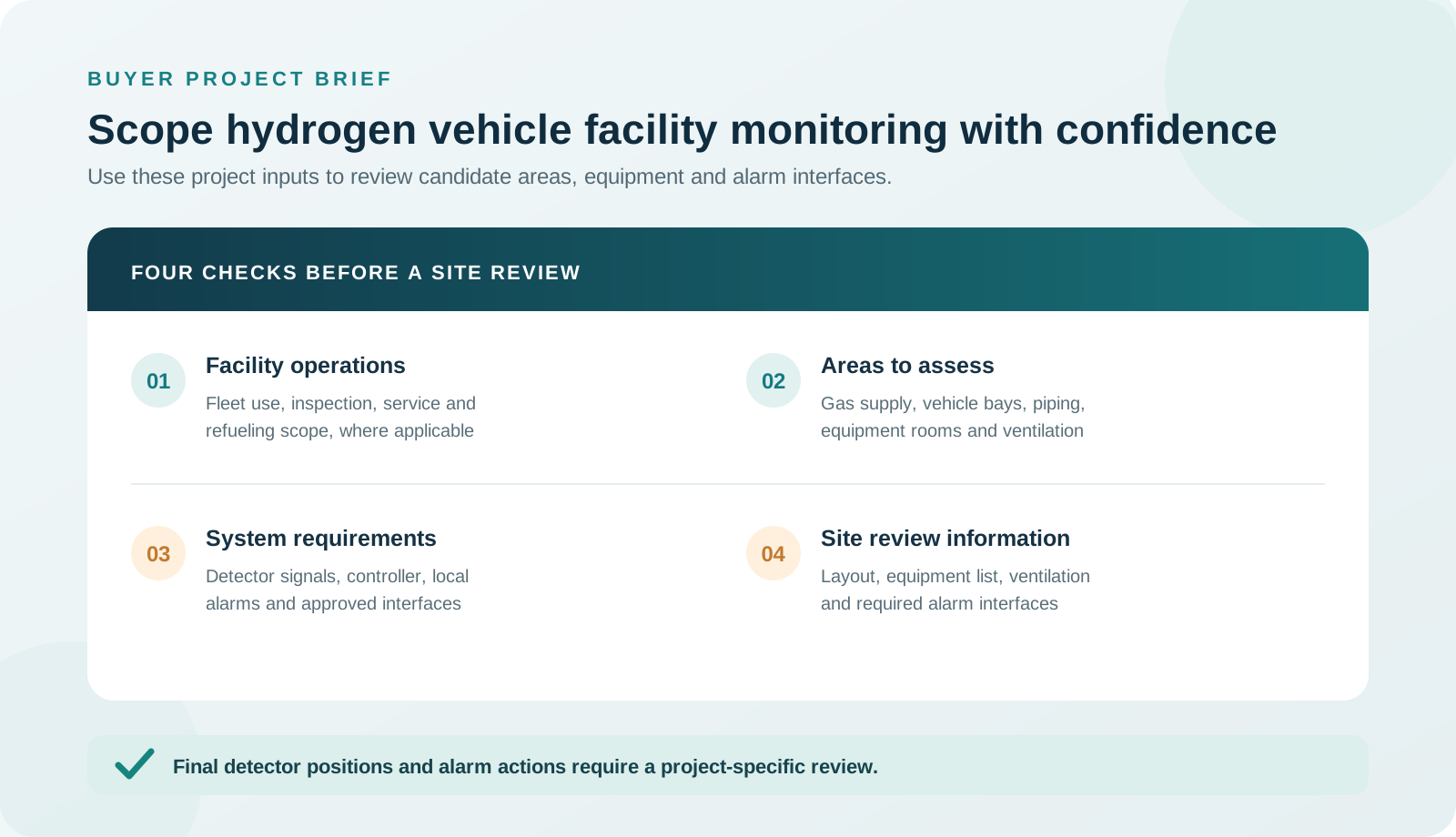
For an initial review, share the site layout, facility type, equipment list, ventilation information, monitored areas and required alarm or control interfaces. Drawings can be optional for the first inquiry; the available information can be used to discuss next steps.
From site review to system configuration
- Tell us the facility type, location and project stage.
- Share available layout drawings, equipment details and ventilation information.
- Review candidate monitoring areas, detector options and alarm interfaces.
- Confirm the proposed equipment scope, documentation and support arrangements.
Discuss your hydrogen vehicle facility project with our team. Installation guidance, commissioning or other support should be confirmed as part of the actual project scope.
Hydrogen vehicle facility leak detection FAQs
Where should hydrogen detectors be installed at a vehicle facility?
Candidate locations depend on likely release points, equipment layout, airflow, ventilation, enclosed spaces and applicable local requirements. A site review should confirm final detector locations and quantities.
Can the system connect to a station alarm or control system?
That depends on the selected controller, its available outputs and the site control design. Share the required interface so compatibility and integration boundaries can be reviewed.
What information is useful for a project quotation?
A site layout, equipment list, facility location, monitored areas, ventilation conditions and required alarm interfaces help define the project scope.
Does gas detection replace ventilation or other safety measures?
No. Gas detection is one part of a broader facility safety design. Ventilation, operating procedures and other safeguards should be addressed by the responsible project team.