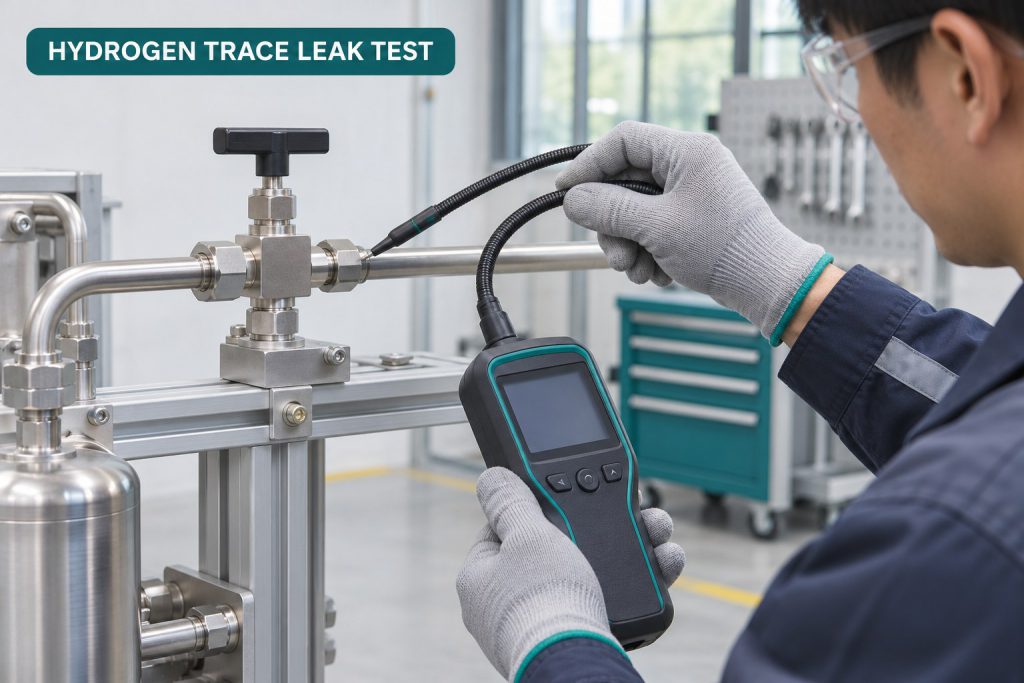
Hydrogen trace leak detection starts with the test object, the required result and the conditions under which the test will be performed. A suitable method may be used for leak screening, leak location or leak-rate measurement, but these are different outcomes. Share your equipment details and acceptance criteria to review the applicable instrument and test approach.
Leak detection for hydrogen equipment and systems
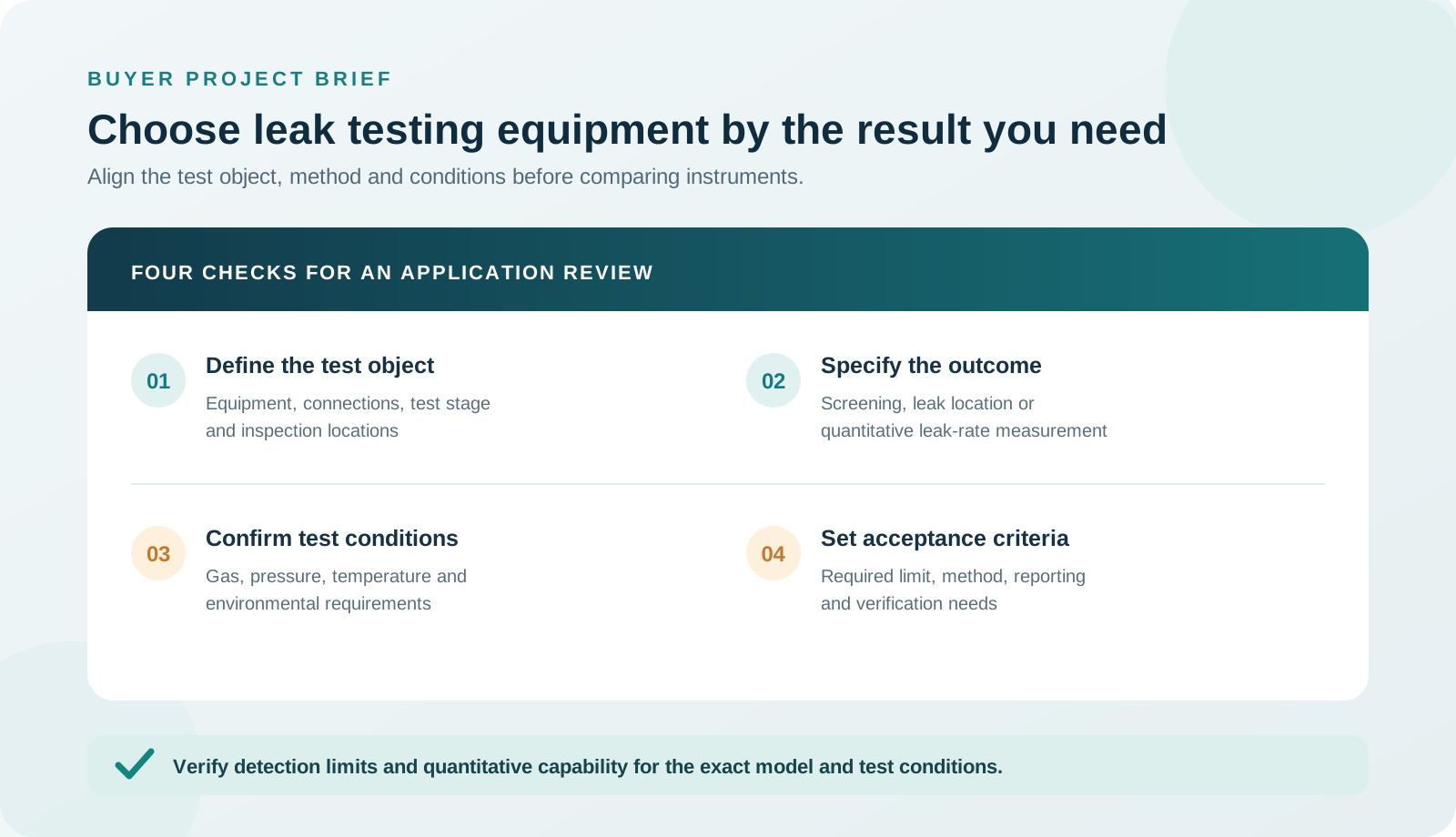
Hydrogen leak testing may be considered during production checks, commissioning, field service, maintenance or laboratory evaluation. The suitable approach depends on the component or system, the test stage, the test gas and the required result. Define whether the task is to screen for a leak, locate a suspected leak or measure a leak rate before selecting equipment.
Instrument suitability, detection limits and field or production applicability must be confirmed for the specific model and test conditions. A general instrument category does not establish a guaranteed detection limit or quantitative capability.
Select a method for the required test
- Portable hydrogen detector: may support field scanning or locating a suspected leak when the selected model, probe and operating conditions are suitable. Confirm its documented range and intended use.
- Fixed gas detection: monitors selected areas over time through detectors and a compatible controller. This is different from component leak-rate testing.
- Tracer-gas or quantitative leak testing: requires a defined test method, gas, pressure, equipment and acceptance criteria. Confirm that the proposed equipment and service actually support the required test.
Only methods supported by current product documentation and the agreed project scope should be specified. Screening, location and quantitative measurement are not interchangeable claims.
Equipment specifications and test conditions
Compare candidate equipment using model-specific documentation. Relevant items may include target gas, detection principle, measurement range or detection limit, probe or sampling method, response time, environmental conditions, output, verification or calibration requirements and applicable certifications. Confirm each item for the exact model and test conditions before procurement.
For portable hydrogen detector options, review the RD-3 Hydrogen Leak Detector and Portable Hydrogen Leak Detector product information. These are candidate product references; verify the documented measurement capability and method suitability for your application.
How a leak test is planned and performed
- Define the test object, test stage, required result and acceptance criteria.
- Confirm the test gas, pressure, temperature, environment and instrument requirements.
- Check the instrument status and follow its documented verification or calibration procedure.
- Scan or test only the specified locations using the selected method and procedure.
- Record readings, locations and test conditions, then evaluate results against the project criteria.
The procedure and interpretation of results should follow the applicable method and project requirements. Do not infer a leak rate from a screening or location result unless the method and instrument support that measurement.
Information for an application review
To help review equipment and method suitability, share the information available:
- Equipment type, drawings and connection details.
- Test stage, such as production, commissioning, field service or laboratory evaluation.
- Test gas, pressure, temperature and environmental conditions.
- Required detection limit, test method or acceptance standard.
- Test quantity, frequency and reporting needs.
Drawings and test procedures can be optional attachments for an initial discussion. Request an application review to discuss the equipment and test conditions.
From application review to equipment selection
- Describe the equipment, application and project stage.
- Specify the required outcome: screening, leak location or quantitative measurement.
- Share test conditions and acceptance criteria.
- Review candidate instrument documentation, method and verification needs.
- Confirm the equipment and agreed project scope before ordering.
Hydrogen trace leak detection FAQs
What does trace leak detection mean for an application?
The term should be tied to a defined test object, method, conditions and acceptance criteria. Confirm what result is required and which model supports it.
What leak rate can an instrument detect?
Use only a model-specific detection limit documented for stated test conditions. Confirm the method and conditions with the applicable technical documentation.
Can a detector locate a leak or quantify its rate?
Leak screening, location and leak-rate measurement are distinct tasks. Confirm which result the selected instrument and procedure can provide.
Is the method suitable for field or production testing?
Suitability depends on the model, probe or sampling arrangement, test conditions and acceptance procedure. Review these details for the intended environment.
What verification or calibration is required?
Follow the selected instrument’s current documentation and the project procedure for verification, calibration and record keeping.