
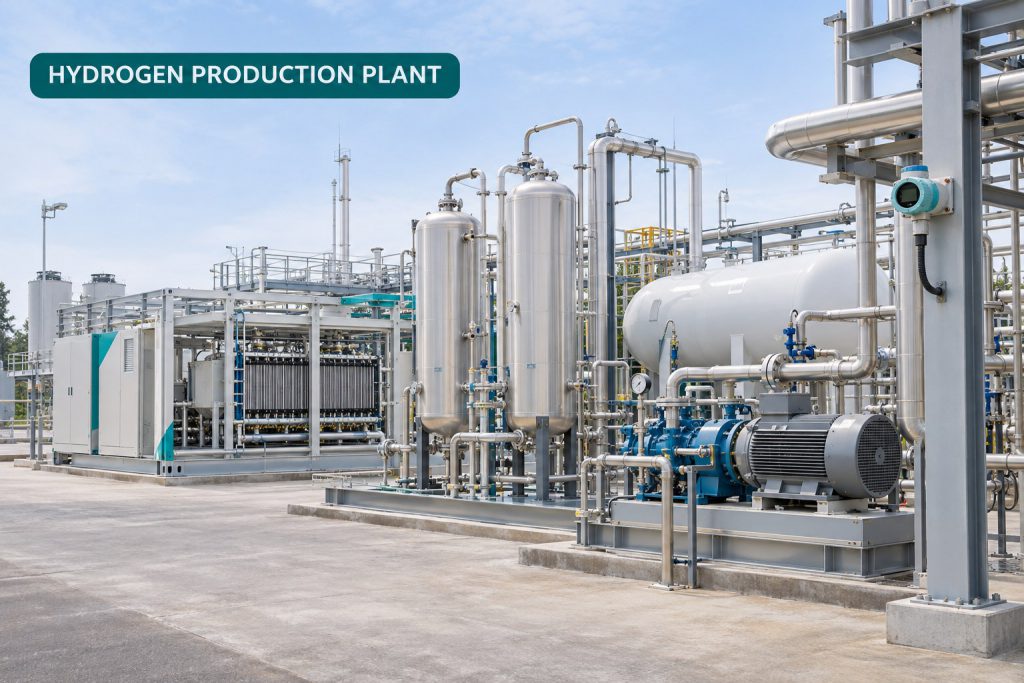
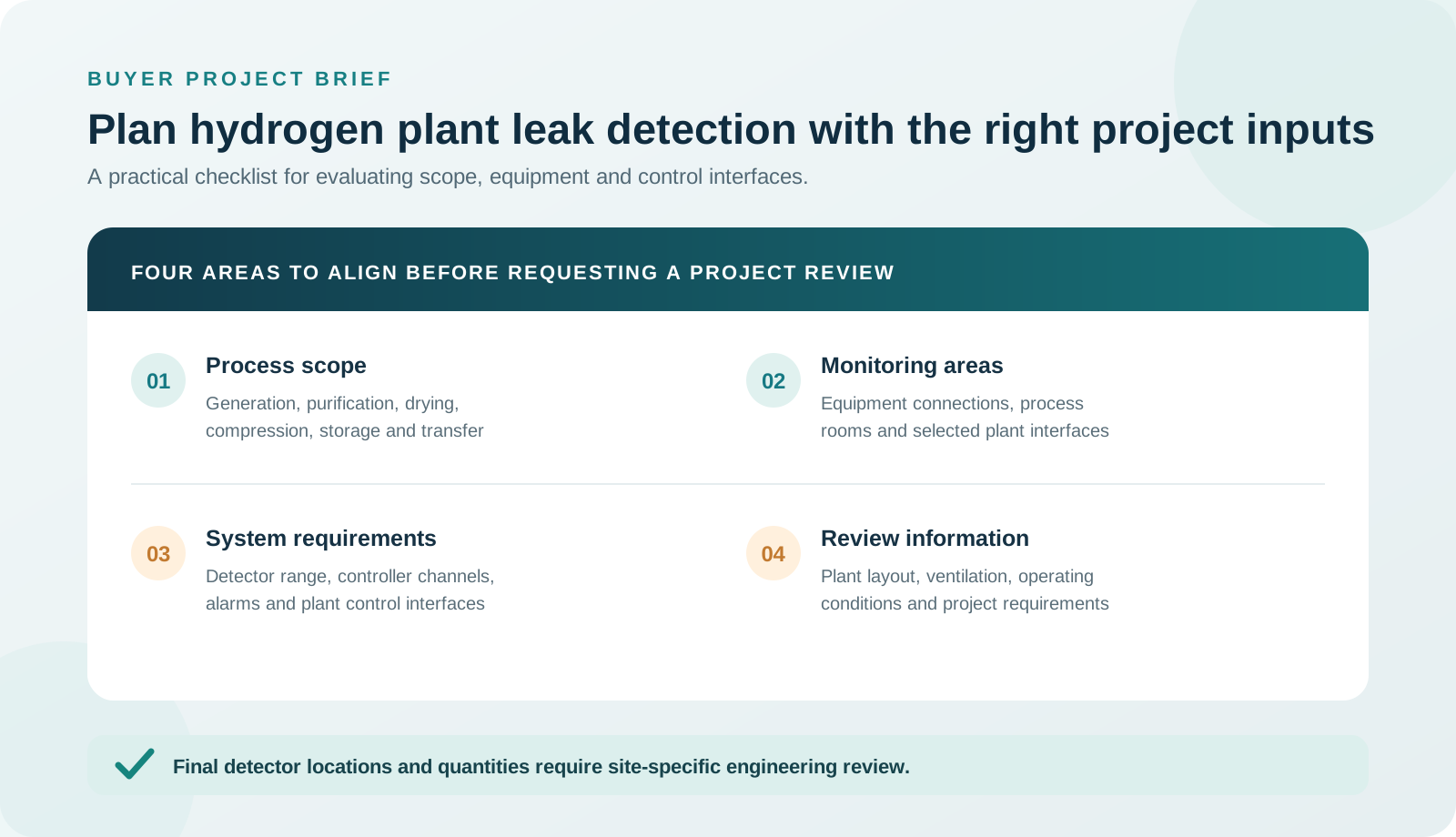
A hydrogen production plant brings together generation, purification, drying, compression, storage and transfer equipment. This safety monitoring solution for hydrogen leakage in hydrogen production plants is planned around selected process areas, potential release points, ventilation conditions and control requirements. A fixed hydrogen gas detection system can provide local measurements and alarm signals for the areas included in the project scope.
Hydrogen leak detection for hydrogen production plants
Hydrogen may be handled across multiple process stages and equipment interfaces. Monitoring requirements therefore depend on the plant process, equipment arrangement, enclosure conditions and how the site wants alarms presented. A project review can help define an appropriate detection scope and identify which detector and controller models should be checked against the intended application.
Gas detection is one part of a plant’s broader safety design. It does not replace process safeguards, ventilation design, maintenance procedures, emergency planning or a site risk assessment. Final detector locations, quantities, alarm thresholds and any control actions must be reviewed for the specific facility.
Production plant areas to include in a monitoring review
Depending on the process and facility layout, an engineering review may consider:
- Hydrogen generation equipment, including electrolyzer areas where applicable, and associated gas outlets.
- Hydrogen purification and drying equipment, sample points, valves and instrument connections.
- Compressors, pressure regulation equipment, manifolds and high-pressure process connections.
- Pipelines, flanges, valve stations and transfer interfaces between process units.
- Buffer vessels and hydrogen storage areas included in the project scope.
- Enclosed equipment rooms or locations with ventilation conditions that warrant specific review.
This list is a planning aid, not a universal detector map. Potential release sources, airflow, ventilation, building geometry, maintenance access, local requirements and the plant’s hazard assessment all influence final placement.
How a hydrogen gas detection system works
A typical project concept follows a simple signal path. A hydrogen detector monitors a selected area and sends its output to a compatible gas detection controller. The controller indicates the alarm state and, where confirmed in the project design, can provide outputs to local audible or visual alarms and plant interfaces such as a PLC or SCADA system.
ILLUSTRATIVE SIGNAL FLOW
System components and configuration checks
Depending on the project scope, a hydrogen monitoring system may include fixed hydrogen detectors, a gas detection controller, local alarm devices and communication or signal interfaces. Select equipment by reviewing the target measurement range, process conditions, installation environment, required outputs and control-system requirements. Model-specific ranges, approvals, response times and environmental ratings should be taken from current technical documentation.
- NA1000AW Online Hydrogen Detector — review the published model information for the intended fixed-monitoring application and verify its suitability for the plant conditions.
- RD3000E Gas Leakage Detection Alarm Controller — check channel capacity, compatible detector signals, alarm outputs and integration requirements against the project scope.
These products are examples from the site catalog. The final selection and compatibility of each device must be confirmed for the particular gas stream, installation environment and control architecture.
Hydrogen detector placement and engineering review
Hydrogen detector placement should be evaluated against potential leak sources, process equipment, air movement and ventilation, structures or obstructions, maintenance access and applicable local requirements. A generic diagram or list cannot determine final point locations or detector quantities for every plant.
For an initial review, share a plant layout or process flow diagram, a list of monitored equipment and areas, available ventilation information, expected operating conditions, required alarm behavior and control interface details. The engineering team can then discuss a project-specific detection scope. Final design and any safety-related control action remain subject to qualified engineering review and applicable site requirements.
Project review and quotation process
- Share the project context. Provide the plant location, process stage, project status and available layout or process drawings.
- Define monitoring needs. Identify candidate areas, process equipment, ventilation conditions and target measurement requirements.
- Review equipment and interfaces. Check detector and controller models, signal types, alarms and requested PLC/SCADA connections against verified specifications.
- Confirm the proposed scope. Review quantities, installation constraints, documentation and any agreed commissioning or technical support before procurement.
To request a review, send your hydrogen plant project details. Include only information you are authorized to share; drawings can be provided separately if needed.
Hydrogen production plant leak detection FAQs
How are hydrogen detectors positioned in a production plant?
Placement is determined from potential leak sources, equipment layout, ventilation and airflow, room geometry, maintenance access and applicable requirements. A site-specific assessment is needed to recommend locations and quantities.
Can the detection system connect to a plant PLC or SCADA?
Some project configurations may use controller outputs or communications interfaces for plant integration. Confirm the available signal and protocol options for the selected models and define the interface with the plant controls team.
What information is needed for a project quotation?
Share the process stage, plant location, monitored areas, operating conditions, detector range needs, alarm and interface requirements, project schedule and available layout drawings or equipment lists.
Can detector quantities be recommended from a plant layout?
A layout can support an initial engineering discussion, but final detector quantities and locations require review of potential release sources, airflow, obstructions, site requirements and the overall safety design.
Does gas detection replace other plant safety measures?
No. Gas detection is one element of a broader safety approach and does not replace process safeguards, ventilation, maintenance, emergency procedures or a qualified site risk assessment.